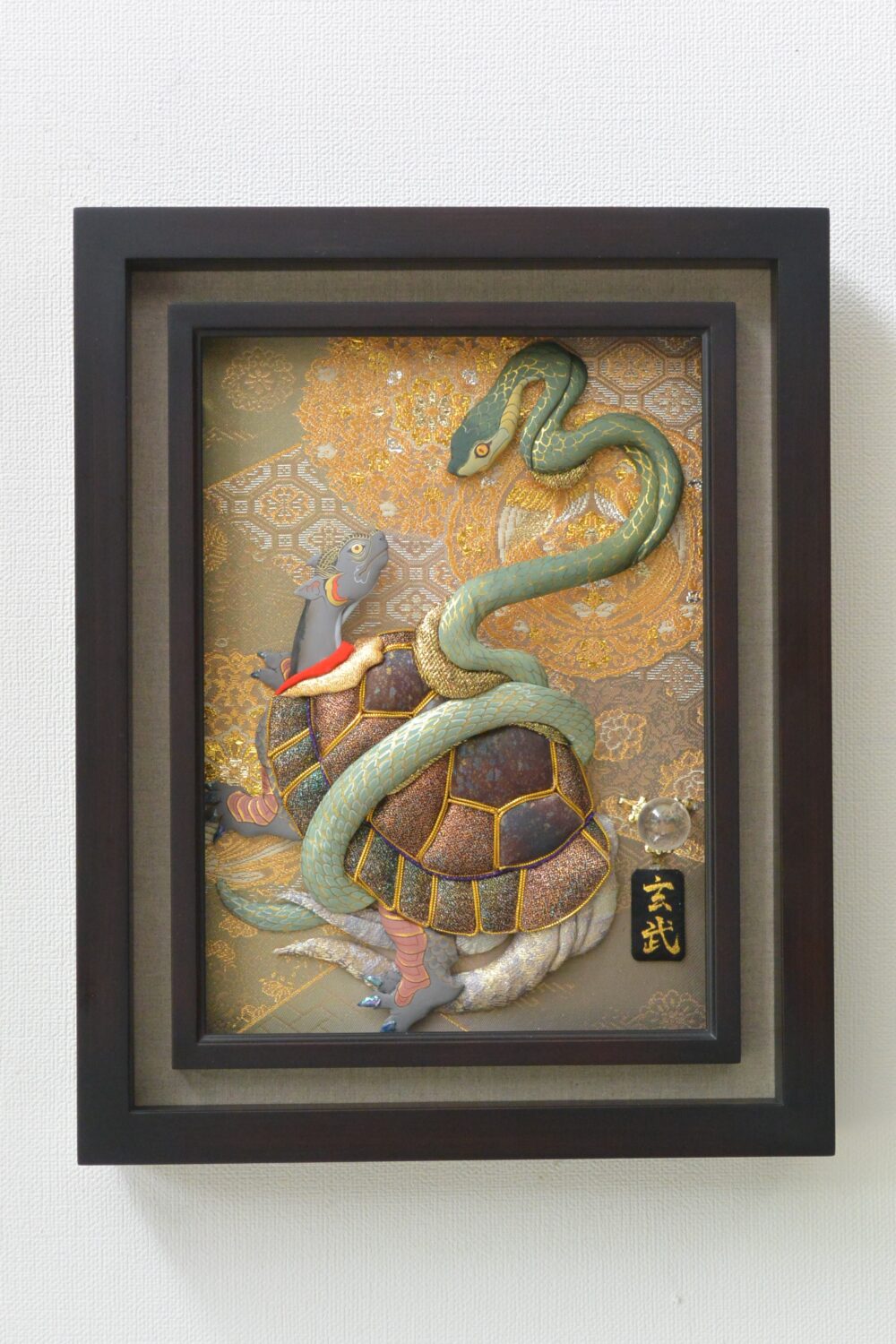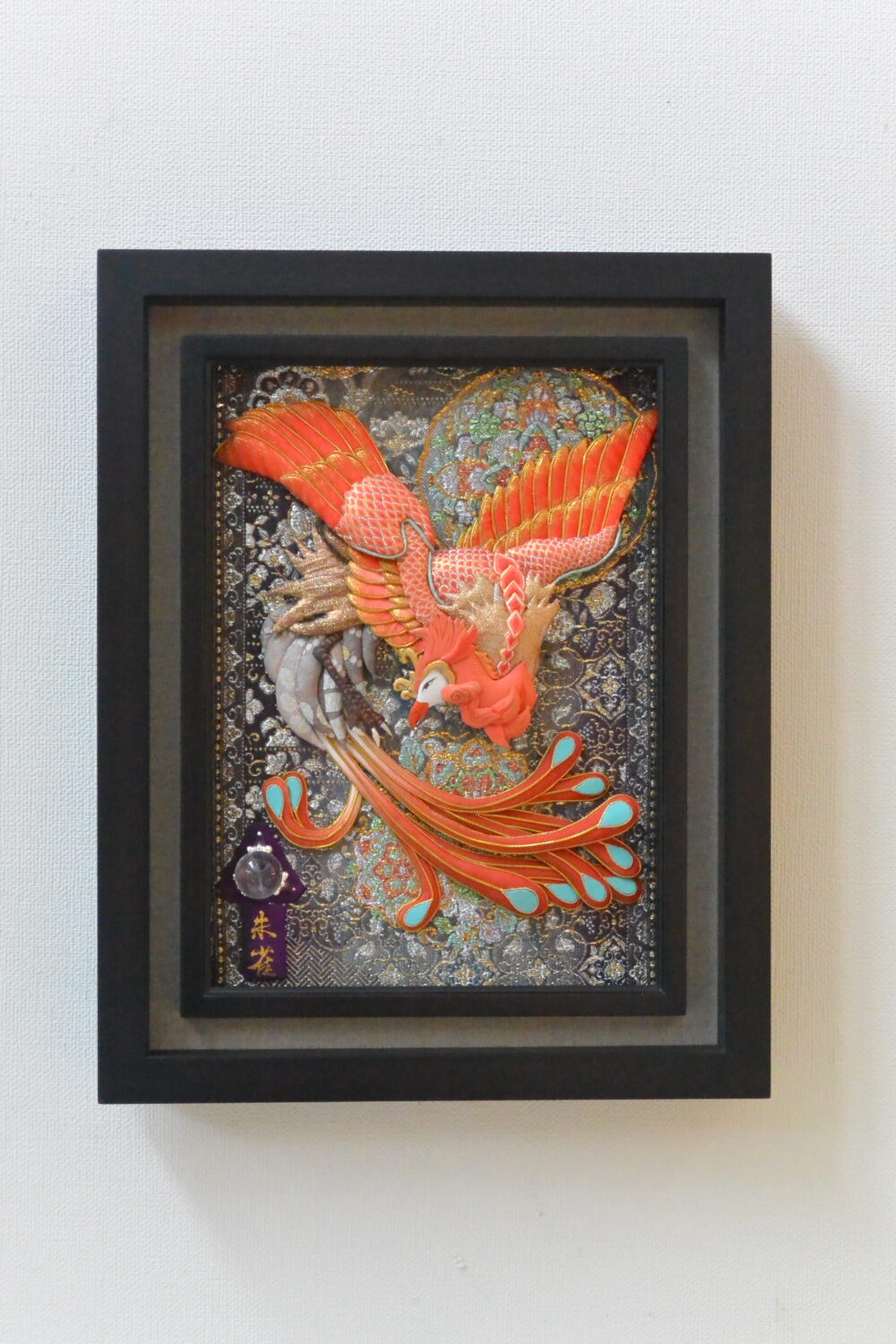





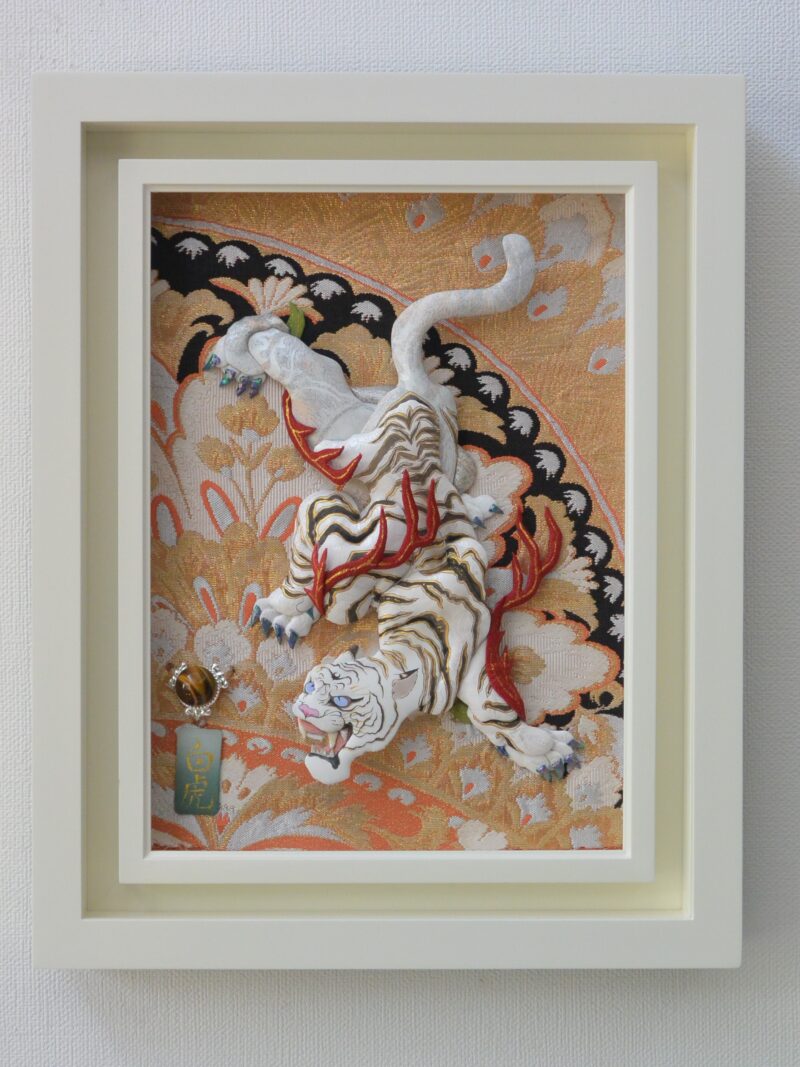
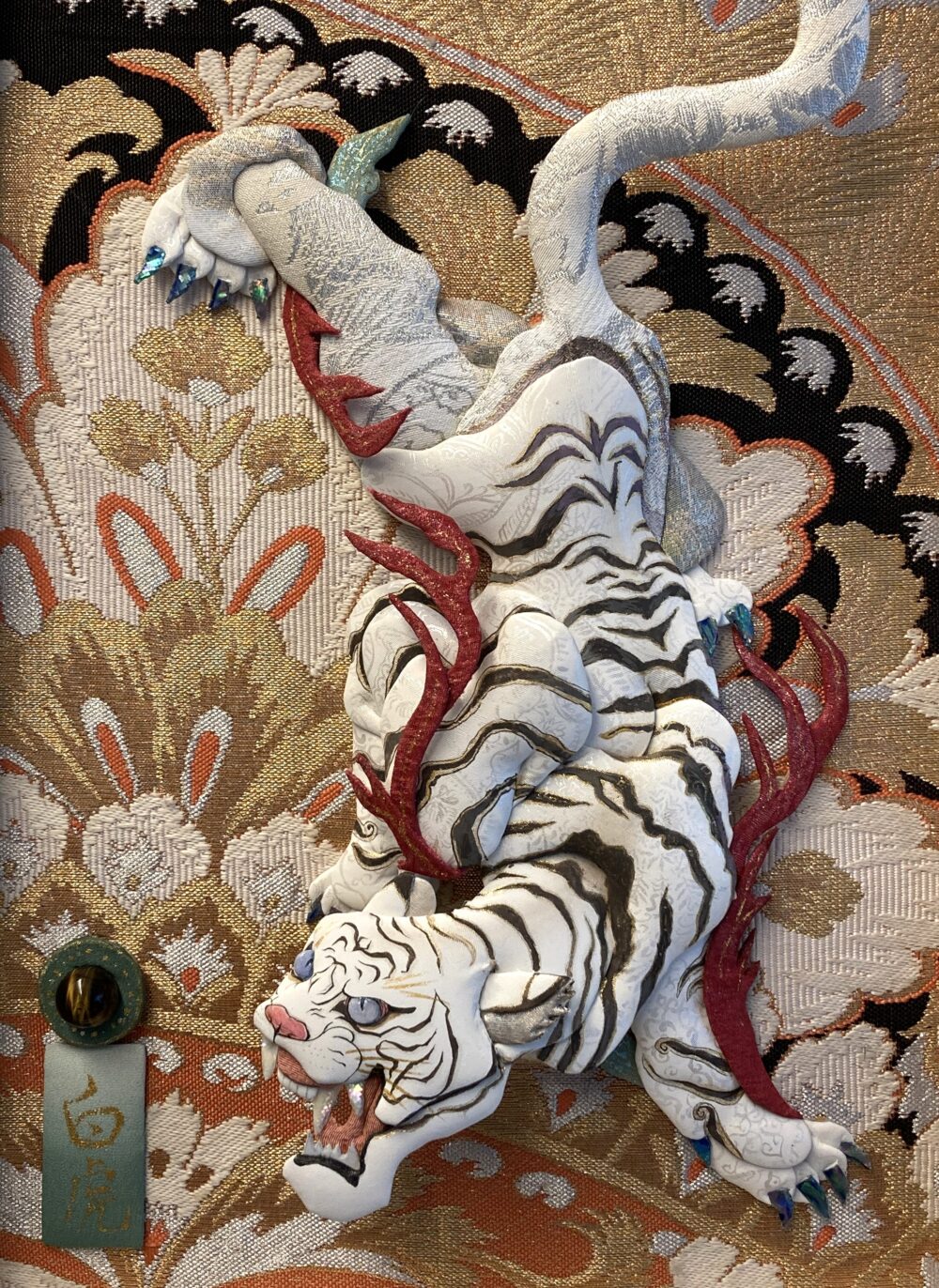
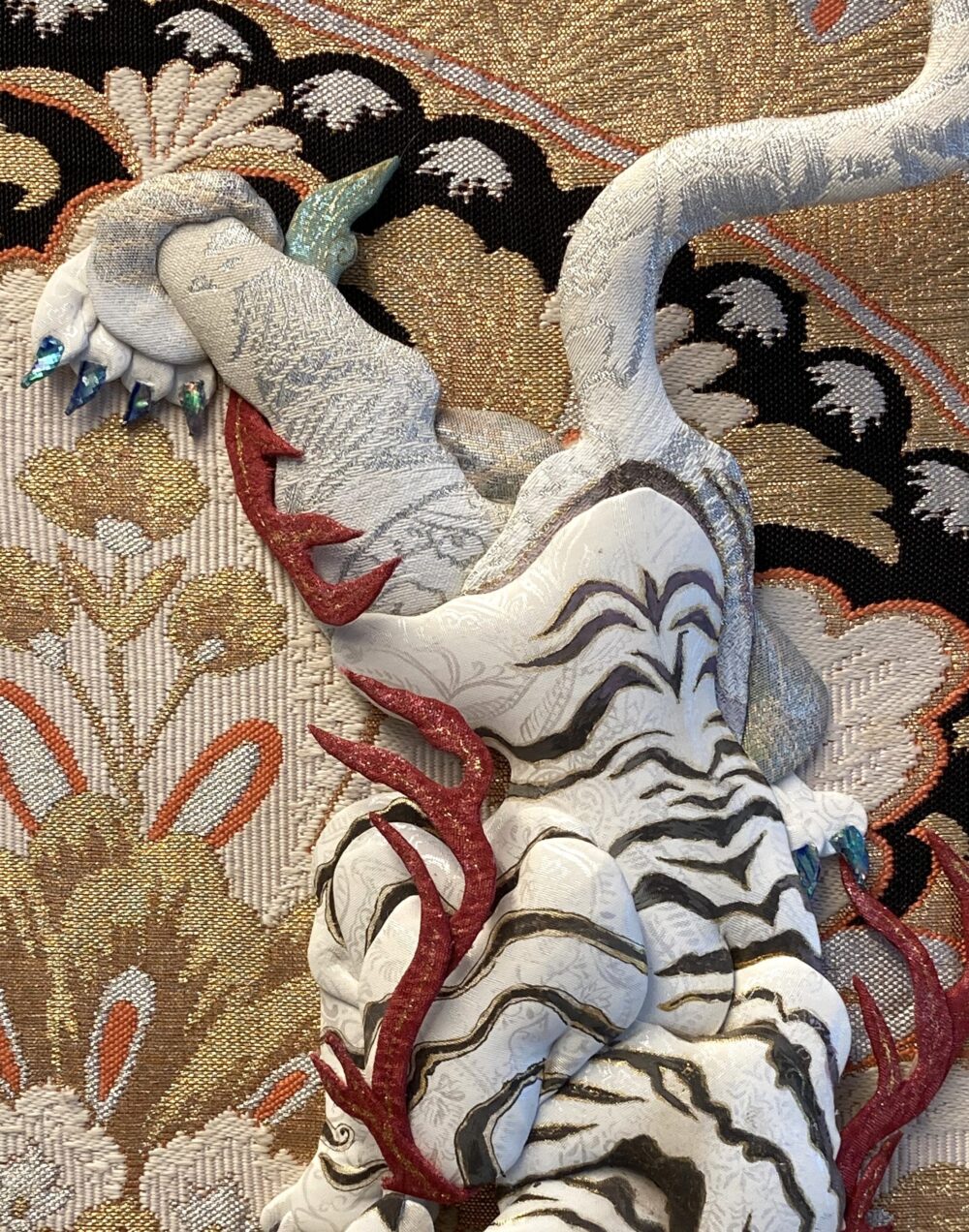
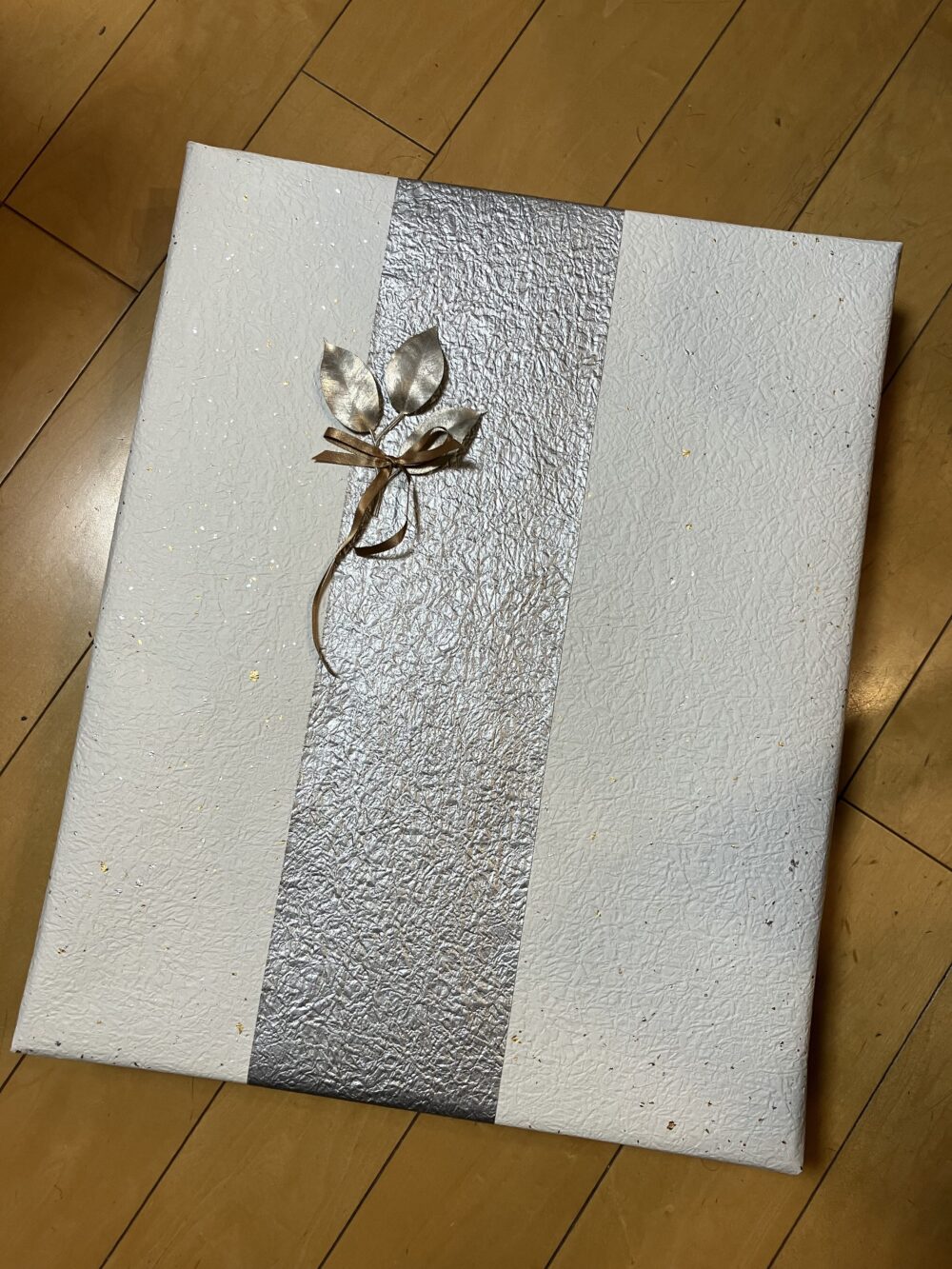
44cm × 35cm × 4.5cm
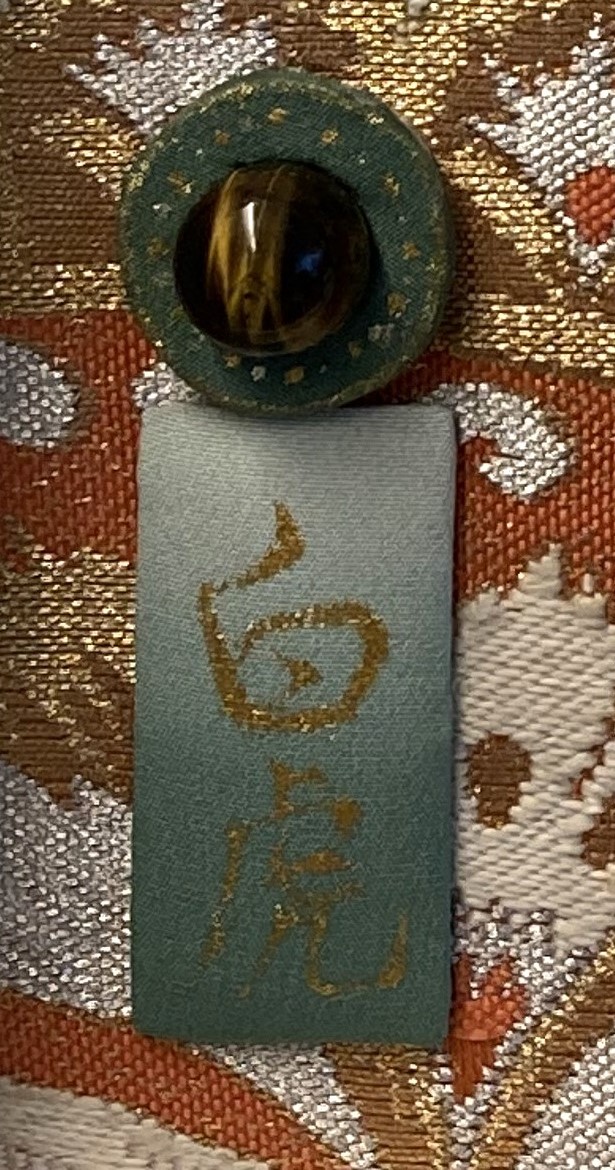
White tiger (Byakko)
White tiger (Byakko)
The Meaning and Benefits of the White Tiger
The White Tiger, with its bravery and beauty, is believed to possess strong power to ward off evil spirits and stabilize family fortune.
Ward off evil spirits and ensure family safety
Among the Four Symbols, the White Tiger excels particularly in both “offense” and “defense,” and is believed to bring the following benefits:
○ Blocking evil spirits: It prevents negative energy from entering from outside, protecting the safety of the family.
○ Improved health: In Feng Shui, a place where all four symbols are present is considered auspicious for health, and the White Tiger plays a part in this.
○ Business prosperity: The west direction is closely associated with financial luck, and the powerful White Tiger symbolizes business success.
A divine messenger that brings happiness
Similar to the Indian legend of the white tiger, it is considered a very auspicious creature, a mythical beast that “brings happiness to those who see it.”
Display Tips
Since they are the same size as the other Four Symbols in the series (44cm x 35cm), you can display them together to create a space that is “harmonious with the Four Symbols” in your home or office.
○ On the west side of the room: To pray for traffic safety and to avoid domestic troubles.
○ At the entrance or doorway: As a gatekeeper to ward off evil spirits from outside and invite in happiness.
○ As a set with the Azure Dragon and Vermilion Bird: By placing the Azure Dragon in the east, the Vermilion Bird in the south, and the White Tiger in the west, you can create a more powerful flow of energy.
When all four symbols are together, you can feel an even greater power of protection.
The word “white tiger” comes from the four divine beasts in Chinese mythology. The Four Gods originated in ancient China and were introduced to Japan, and it is said that the four divine beasts guard the four directions of the heavens: the Seiryu in the east, the Suzaku in the south, the White Tiger in the west, and Xuanwu in the north. .
The land where the four gods are placed is considered to be the best place in Feng Shui, and is said to block out evil spirits, attract happiness, and bring good health and luck. Also, based on the theory of Yin-Yang and Five Elements, a “Kirin” or “Yellow Dragon” is sometimes included in the center, in which case they are called the Five Gods or the Five Beasts.
The white tiger is considered an auspicious creature because of its beautiful appearance. In India, white tigers are considered messengers of the gods, and legend has it that they bring happiness to those who see them.
| キトラ古墳 白虎図 |
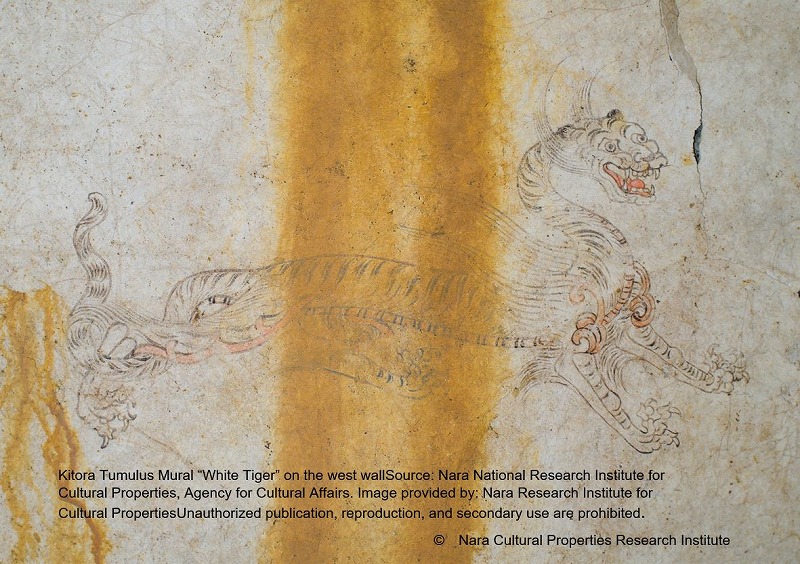
In Japan, a white tiger is also depicted on the pedestal of the principal image of the Kondo of Yakushiji Temple in Nara Prefecture, and on the west wall of the inner stone coffin of the Kitora tomb in Asuka Village.
“A land suitable for the four gods” is a land where the four gods who control the four directions protect the north, south, east, and west, and means “the best land” where good energy gathers and stays. It is said that there is a clear stream to the east (Soryu), a wide open wetland to the south (Suzaku), a long road to the west (Byakko), and a towering mountain to the north (Genbu).
In Heiankyo, “Soryu” is said to be the Kamogawa River, “Suzaku” is said to be Okuriike, “Byakko” is Sanin-do (or Sanyo), and “Genbu” is Mt. Funaoka.
In this way, Heiankyo was built based on the idea of corresponding to the four gods. Yasaka Shrine to the east, Jonangu Shrine to the south, Matsuo Taisha Shrine to the west, and Kamigamo Shrine to the north were built to protect the four gods, and Heian Shrine is the center of these four gods.